

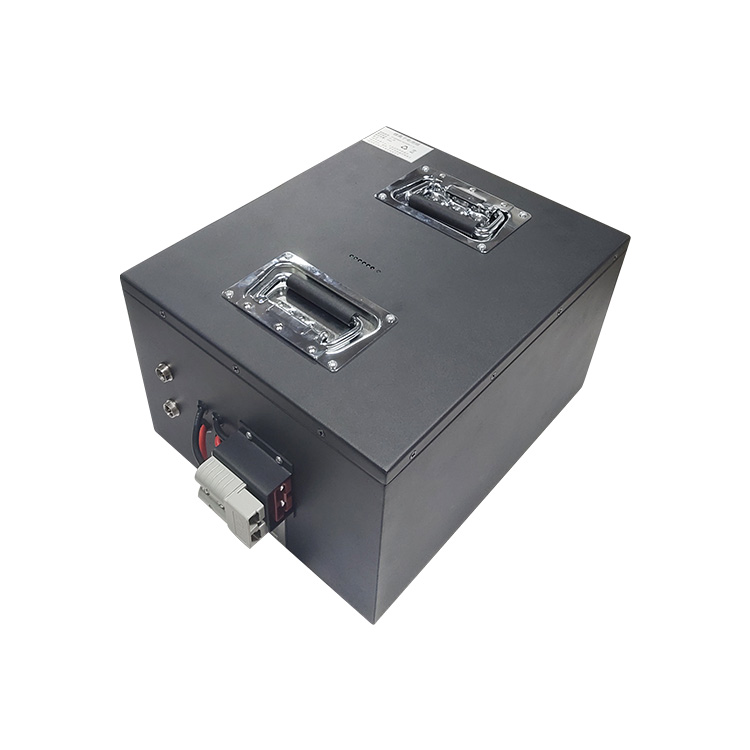


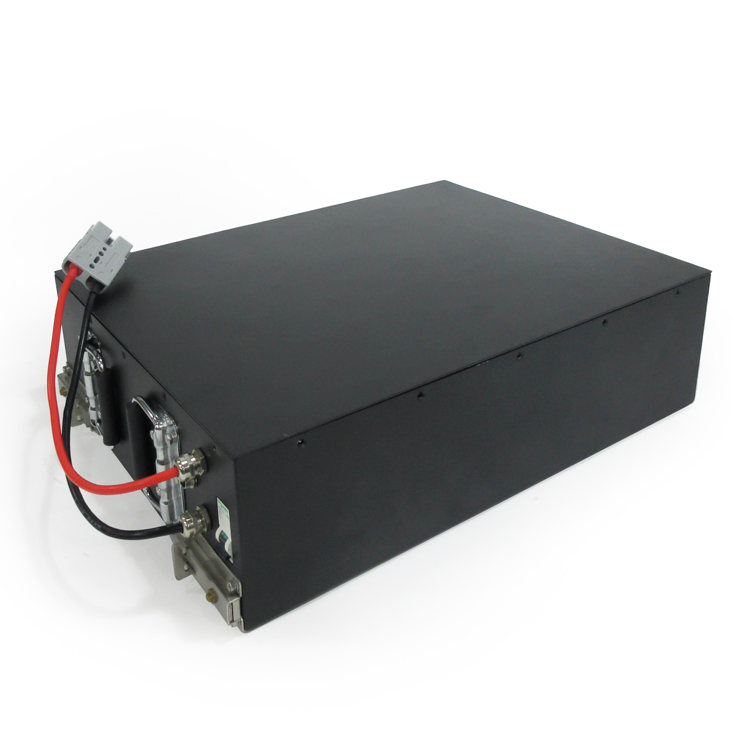
48v200ah Parking Air Conditioning Lithium Battery System Complete Solution
The demand for comfort, energy conservation and environmental protection in the automobile industry is constantly increasing. As an important equipment to improve the comfort of the parking environment, parking air conditioners have been widely used. Traditional parking air conditioners mostly rely on vehicle engines or external power supplies for power supply, which has problems such as high energy consumption, high noise and emission pollution. Using 48V200Ah lithium battery system to provide electric energy for parking air conditioner can not only realize the parking air conditioner scheme with high efficiency, low noise and environmental protection, but also effectively improve the use experience of vehicles. This article will introduce in detail the design scheme of lithium battery system of 48V200Ah parking air conditioner, including system composition, core technology, key points of design and safety protection measures.
I. System composition and function overview
48V200Ah parking air conditioning lithium battery system mainly consists of lithium battery module, battery management system (BMS), battery protection device, charge and discharge control system, thermal management system and interface with air conditioning control unit. The overall design of the system is to meet the requirements of high-power start and long-term continuous operation of parking air conditioners, and to ensure the stability and safety of power supply.
1. Lithium battery module
it adopts 48V rated voltage and the capacity is lithium ion battery pack of 200Ah. Lithium iron phosphate (LiFePO4) cell is usually selected because of its high safety, long service life and good thermal stability. The battery pack is assembled in series and parallel to ensure that the output voltage and capacity meet the power requirements of the parking air conditioner.
2. Battery management system (BMS)
BMS is the core control unit of the system, which is responsible for monitoring the voltage, current, temperature and State of the battery pack to prevent abnormal conditions such as overcharge, overdischarge, short circuit and overtemperature, ensure the safe and stable operation of the battery. In addition, BMS also implements SOC (battery state of charge) and SOH (health state) estimation to optimize battery usage efficiency.
3. Charge and discharge control system
the system is equipped with intelligent charging management unit and supports various charging modes, including constant current charging, constant voltage charging and trickle charging, to ensure the charging efficiency and service life of the battery pack. The discharge control part can realize large current output and meet the high power demand of parking air conditioner at the moment of starting.
4. Thermal management system
considering that lithium batteries are sensitive to temperature, the system integrates liquid cooling or air cooling heat management schemes to keep the battery pack within the optimal operating temperature range and improve battery performance and safety. The design of thermal management scheme should take into account the cost, weight and system complexity.
5. Interface and communication
the system is equipped with standardized interfaces to communicate with vehicle air conditioning control unit and vehicle-mounted CAN bus, realizing real-time feedback of battery status and coordinated control of air conditioning energy consumption, and improving the intelligence level of the system.
II. Key points of system design
1. High power output design
when the parking air conditioner starts, it needs a large current, and the battery system design needs to ensure that it can output high rate current in a short time to avoid the sudden drop of voltage affecting the start of the air conditioner. Therefore, it is battery pack to select low internal resistance cell and reasonably design the series-parallel structure to ensure current balance.
2. Capacity and endurance requirements
the 200Ah capacity design, combined with 48V voltage, can meet the long-term operation requirements of parking air conditioners. According to the calculation of parking air conditioning power is generally about 1.5kW, the theoretical endurance can reach 6-7 hours, which meets the comfort requirements during vehicle parking.
3. Security protection mechanism
in the system design, battery thermal runaway and electrical fault protection are mainly considered, and BMS monitors abnormal status in real time and triggers protection measures. Battery pack the structure adopts flame retardant material, adding protective isolation layer to prevent thermal diffusion. The system is also equipped with fuse and circuit breaker to ensure electrical safety.
4. Lightweight andCompact Design
in order to adapt to the limitation of vehicle space, the design of battery system focuses on light weight and compactness. Modular design is adopted to facilitate installation and maintenance. Reasonable layout of battery monomer and thermal management system to optimize the overall volume and weight.
5. Charging convenience
the system supports a variety of charging methods, including car charger, external charging pile and solar auxiliary charging, improving charging flexibility. Charging Interface design conforms to industry standards and is convenient for users to operate.
III. Core technology implementation
1. Cell selection and assembly
lithium iron phosphate batteries is widely used due to its stable chemical properties and high safety performance. The battery module is assembled with high-precision automation equipment to ensure consistency and reliability. Strictly control the welding process and insulation treatment during the assembly process to avoid potential electrical faults.
2. Intelligent management of BMS
BMS uses multi-point sampling technology to monitor the battery in real time.The status of each monomer. Accurate SOC estimation is realized through algorithm optimization to prevent overcharge and overdischarge from damaging the battery. BMS has fault diagnosis and data recording functions to facilitate later maintenance and performance analysis.
3. Thermal Management Integration
in view of the large temperature changes in the parking environment, the design of the thermal management system adopts an efficient liquid cooling scheme to realize dynamic temperature control with the distribution of temperature sensors. The coolant circulation system ensures stable battery temperature and prevents overheating and temperature gradient.
4. Electrical safety design
multiple protection circuits are adopted, including high and low voltage circuit breakers, overcurrent protection, short circuit protection and insulation monitoring. The design of the battery box conforms to the IP level protection standard, prevents the intrusion of water vapor and dust, and improves the reliability and durability of the system.
IV. System operation and maintenance
1. Daily monitoring
view battery status information in real time through vehicle display screen or mobile terminals, including voltage, current, temperature, and remaining power. Grasp the battery health status in time to avoid potential safety hazards caused by abnormal use.
2. Maintenance
check the battery connector and cooling system regularly to ensure that there is no looseness or blockage. Upgrade the BMS software and optimize the management strategy. After the life of the battery pack is over, recycle it according to the environmental protection requirements.
3. Emergency handling of faults
the system is designed to improve the fault alarm mechanism. Once abnormal power is detected, the system will automatically power off to protect the safety of vehicles and users. Users should follow the instructions to avoid self-disassembly and maintenance.
48V200Ah parking air conditioning lithium battery system the scheme focuses on high safety, high performance and intelligent management, fully meeting the high requirements of parking air conditioners for power supply. The system adopts lithium iron phosphate batteries, combined with advanced BMS and thermal management technology to ensure stable and reliable operation of the battery pack under various working conditions.

 Dongguan Juneng New Energy Technology Co., Ltd.
 137 5142 6524(Miss Gao)
 susiegao@power-ing.com
 Xinghuiyuan High tech Industrial Park, Dalang Town, Dongguan City, Guangdong Province

 Yue Gong Wang An Bei No. 4419002007491