



AGV Battery Selection Guide
With the continuous advancement of intelligent manufacturing and logistics automation, automatic Guided Vehicle (AGV,Automated Guided Vehicle) is more and more widely used in storage, production line, distribution and other fields. As one of the core components of the AGV system, the selection of batteries is directly related to the operating efficiency, endurance and safety performance of the AGV. This article will introduce the types, performance indicators, selection principles and precautions of AGV batteries in detail to help enterprises and users choose suitable AGV batteries scientifically and reasonably.
I. Main types of AGV batteries
the batteries used by AGVs are mainly divided into the following categories:
1. Lead acid battery
lead-acid battery is a traditional AGV Battery, which has the advantages of low cost, mature technology, simple maintenance, etc. Common types include sealed lead-acid batteries (such as AGM and gel battery) and traditional liquid lead-acid batteries.
Advantages:
- low price and small purchase cost;
- simple structure, mature technology and convenient maintenance;
Disadvantages:
- low specific energy, large volume and weight;
- the cycle life is short, generally about 300-500 times;
- the charging time is long and the charging efficiency is not high.
2. Lithium ion battery
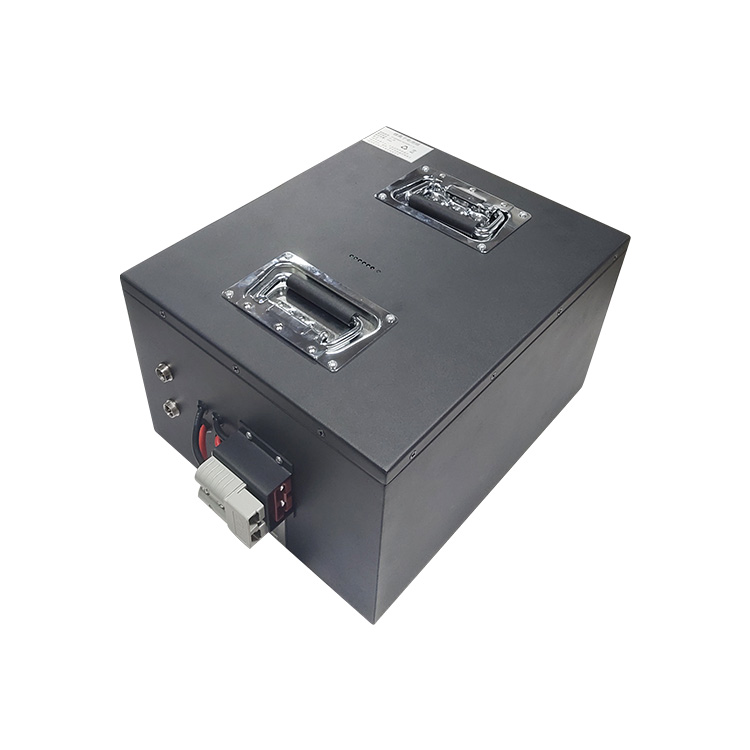
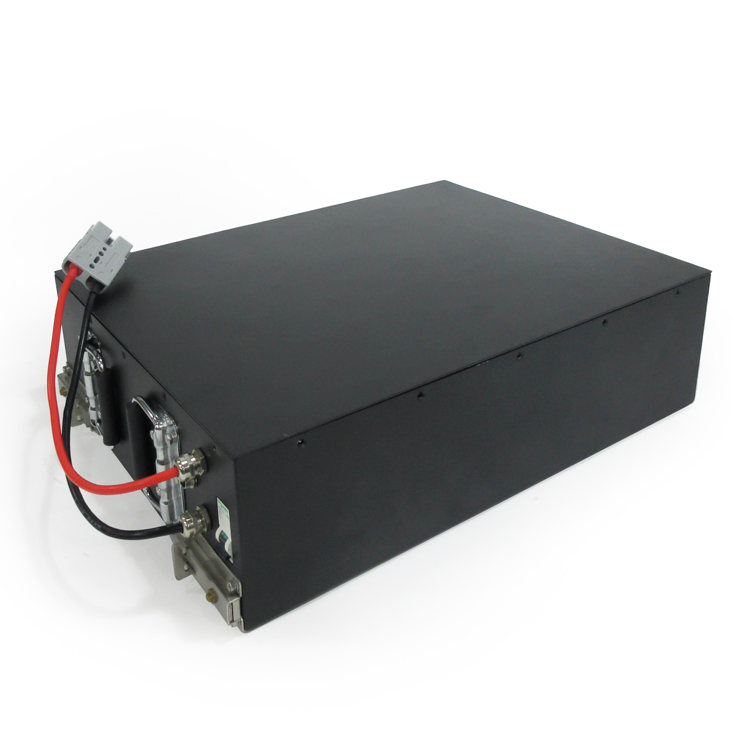
with the development of lithium battery technology, lithium ion battery has gradually become the mainstream battery type of AGV. It mainly includes lithium iron phosphate battery and ternary lithium battery.
Advantages:
- high energy density, small volume and light weight are conducive to improving the load and endurance of the AGV;
- long cycle life, generally more than 2000 times, reducing the replacement frequency;
- fast charging speed, support fast charging;
- green and environmentally friendly, no pollution.
disadvantages:
- the cost is relatively high and the initial investment is relatively large;
- professional battery management system (BMS) is required for monitoring and protection;
- high requirements on charging and discharging environment, temperature and humidity need to be controlled.
3. Ni-MH battery and other types
NI-MH battery is also adopted by some AGVs due to its high energy density and environmental protection, but due to cost and performance reasons, its application is relatively small. In addition, new battery technologies such as solid-state batteries are still in the research and development stage and have not been applied to AGVs on a large scale.
II. Key performance indicators of AGV batteries
when selecting an AGV Battery, you need to focus on the following performance indicators:
1. Capacity and battery life
the battery capacity determines the battery life of the AGV. The larger the capacity, the AGV canThe longer the continuous working time is. The capacity is usually expressed in hours (Ah) or hours (Wh), which needs to be properly matched according to the load, working time and charging frequency of the AGV.
2. Cycle life
cycle Life refers to the effective times of the battery in the charge and discharge cycle. The longer the cycle life, the longer the battery life, which helps reduce maintenance costs. The cycle life of lithium battery is obviously better than that of lead-acid battery, which is an important reference for selection.
3. Charging time
the charging time affects the working efficiency of the AGV. Batteries with strong fast charging ability can shorten downtime and improve production efficiency. Lithium batteries have obvious advantages in fast charging.
4. Charge and discharge efficiency
efficient charging and discharging process can reduce energy waste and operation cost. The charging and discharging efficiency of lithium ion batteries is relatively high, generally exceeding 90%.
5. Security performance
the battery must have good safety performance.To avoid risks such as overcharging, overdischarging, short circuit, and overheating. In particular, lithium batteries need to be equipped with a complete battery management system (BMS) to ensure safety.
6. Adaptability of working environment
AGVs often work under different temperature, humidity and vibration conditions, and batteries must have certain environmental adaptability to ensure stable operation.
III. Selection principle of AGV Battery
1. Determine the battery type according to the application requirements
enterprises should reasonably select the battery type according to the specific application scenarios, load requirements and battery life of AGVs. Lead-acid batteries are still optional for applications with limited budget and low endurance requirements. However, lithium-ion batteries are the better choice for scenarios with high requirements on endurance, charging efficiency and service life.
2. Consider the size and weight of the battery
the volume and weight of the battery directly affect the design and load capacity of the AGV. Lithium batteries are small in size and light in weight, which is conducive to improving the flexibility and load performance of AGVs.
when selecting a battery, it is necessary to ensure that the battery has a perfect safety protection mechanism. In particular, lithium batteries must be equipped with an efficient battery management system (BMS) to monitor the battery status in real time to prevent safety accidents.
4. Pay attention to the matching of charging methods and charging facilities
different batteries support different charging methods, and the devices required for fast charging and standard charging are different. The compatibility of charging facilities should be considered in the selection to ensure safe and efficient charging process.
5. Evaluate cost-benefit ratio
battery costs include initial purchase costs and later maintenance and replacement costs. When selecting, the service life, maintenance cost, energy efficiency and safety of the battery should be comprehensively considered, and an economical and reasonable scheme should be selected.
IV. Precautions for use of AGV Battery
1. Reasonable charge and discharge
avoid excessive battery dischargeOr overcharge to prolong battery life. The operation shall be carried out according to the charging and discharging curve recommended by the manufacturer.
2. Regular maintenance and inspection
for lead-acid batteries, the electrolyte level should be checked regularly to keep in good condition; Lithium batteries should regularly detect the temperature, voltage and current of the battery pack, and find and deal with abnormalities in time.
3. Maintain appropriate environmental conditions
avoid battery working in extreme high temperature or low temperature environment, and prevent performance degradation and potential safety hazards.
4. Reasonable configuration of battery management system (BMS)
ensure that the functions of the BMS are perfect, and the battery status can be monitored in real time for balanced charging and fault protection.
5. Safe storage and transportation
the battery should be protected from mechanical damage, short circuit and high temperature during storage and transportation to ensure stable battery performance.
AGV Battery as the power core of the AGV system, its selection directly affects the performance, efficiency and safety of the equipment. Lead-acid battery and lithium-ion battery are the main battery choices of current AGVs. The former is mainly based on cost advantages, while the latter is excellent in energy density, service life and charging speed. Scientific and reasonable selection of batteries according to application requirements, performance indicators and safety requirements, appropriate management systems and routine maintenance are the key to ensure the efficient and stable operation of AGVs.

 Dongguan Juneng New Energy Technology Co., Ltd.
 137 5142 6524(Miss Gao)
 susiegao@power-ing.com
 Xinghuiyuan High tech Industrial Park, Dalang Town, Dongguan City, Guangdong Province

 Yue Gong Wang An Bei No. 4419002007491