



Redundancy Solution for the Power Battery of AGV Forklifts
As an important part of modern logistics and manufacturing industry, automatic guided vehicle (AGV) is widely used in automated operations of warehousing, distribution and production lines. The efficient operation of AGV forklift depends on the performance and reliability of its power battery. However, the safety and stability of power battery directly affect the operation efficiency and Operation Safety of AGV. Therefore, it is particularly important to build an effective power battery redundancy solution. This article will discuss the necessity, design principles and implementation scheme of power battery redundancy of AGV forklift.
I. Necessity of power battery redundancy
1. Improve security
the power battery undertakes the core task of power supply in the AGV forklift. Once a failure or failure occurs, it may lead to the shutdown of the AGV and even lead to safety accidents. Through redundant design, when a group of batteries fails, it can automatically switch to the backup battery to ensure the safe operation of the AGV.
2. Extend working hours
in some high-load working environments, AGVs need to work stably for a long time. Redundant battery system can provide additional power support in time when the main battery power is insufficient, so as to avoid interruption of work due to insufficient power and improve work efficiency.
3. Ensure stability
during the operation of the AGV forklift, it may face different loads and operating conditions. Redundant battery system can flexibly allocate batteries based on real-time monitoring data.Improve the stability and reliability of the whole system.
II. Design principles of power battery redundancy
when designing the power battery redundancy scheme of the AGV forklift, the following principles should be followed to ensure the effectiveness and practicability of the system.
1. Modular design
the redundant battery system should adopt modular design to facilitate maintenance and replacement. By dividing the battery pack into multiple modules, damaged modules can be quickly replaced in case of failure, reducing downtime.
2. Intelligent monitoring
the system shall be equipped with intelligent monitoring function to monitor the status and performance parameters of the battery in real time, including voltage, current, temperature, etc. Once an exception is detected, the system can automatically switch to the backup battery and send an alarm to the operator.
3. Efficient Management
the management system of redundant batteries should have efficient energy distribution and scheduling functions. By optimizing the use and charging strategy of batteries, the service life of each group of batteries is ensured to be maximized while energy loss is reduced.
4. Reliability test
when designing a redundant battery system, sufficient reliability tests are required to ensure that the system can operate stably under various working conditions. The reliability and safety of the system are verified by simulating the operation under different load and environmental conditions.
III. Power battery redundancy solution
1. Dual battery pack design
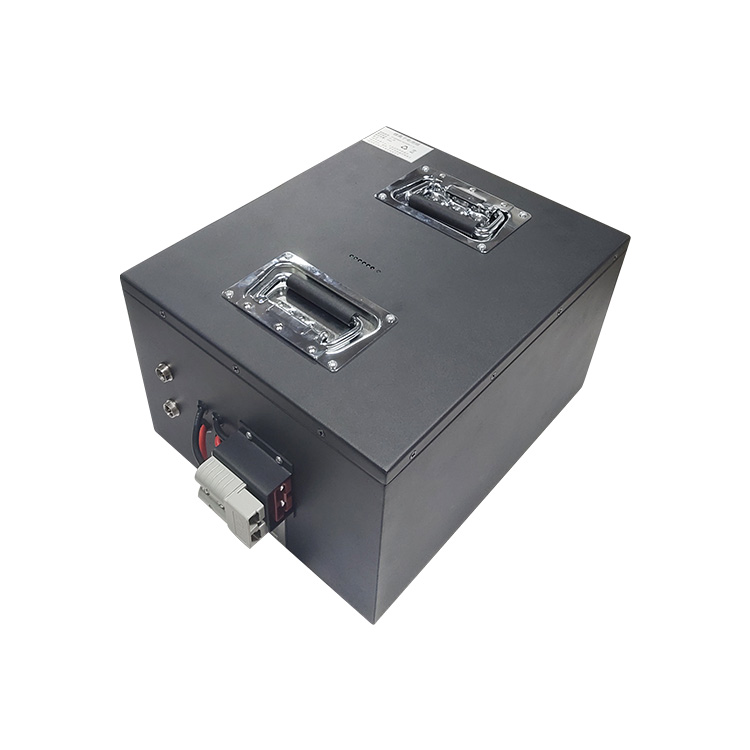
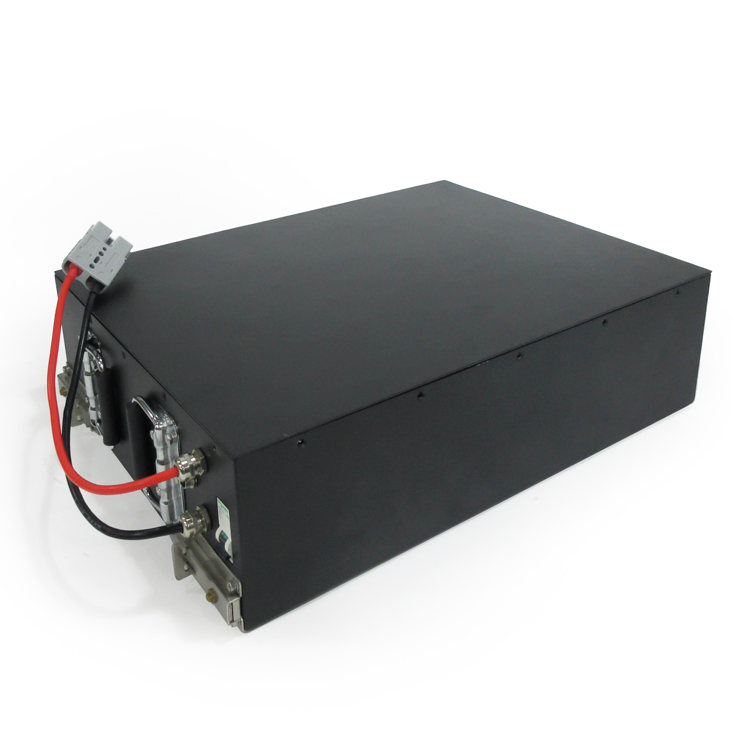
in the AGV forklift, the dual battery pack design is a common way to realize battery redundancy. The two battery packs can be configured in parallel or in series. When one battery pack fails or the power is insufficient, the system will automatically switch to another battery pack to ensure the continuous operation of the AGV.
Advantages:
- simple and easy to implement: The design is relatively simple and easy to implement.
- Cost controllable: Although the number of battery packs is increased, the cost can be controlled by selecting appropriate battery brands and models.
2. Dynamic battery management system (BMS)
dynamic battery management system (BMS) can monitor the status of the battery in real time and switch power intelligently according to the health status of the battery. The system can monitor each battery module separately to ensure that other modules can work normally in case of failure.
Advantages:
- improve safety: it can detect the battery status in real time and respond to faults in a timely manner.
- Enhanced flexibility: the system can automatically adjust the battery usage strategy according to the load condition.
3. Charging and maintenance strategy
the efficiency of the redundant battery system depends not only on the design of the battery, but also on the charging and maintenance strategies. The battery should be charged and maintained regularly to ensure that the battery works in the best condition.
Advantages:
- extended service life: through scientific charging and maintenance strategies, the service life of the battery can be prolonged and the overall operating cost can be reduced.
- Improve Reliability: regular maintenance ensures the stability of battery pack under high load.
IV. Precautions for implementing redundant battery system
when implementing the power battery redundancy system of the AGV forklift, we need to pay attention to the following aspects to ensure the effectiveness and safety of the system.
1. Select the appropriate battery type
different types of batteries have differentThe performance characteristics. When selecting redundant batteries, the energy density, cycle life, charging speed and other factors of the batteries should be considered to ensure that they can meet the needs of the AGV forklift.
2. Conduct comprehensive tests
after the system integration is completed, a comprehensive comprehensive test is required to verify the performance of the redundant battery system under different working conditions. The reliability and security of the system are ensured by simulating actual use scenarios.
3. Train operators
the training of operators is also crucial. Provide necessary training for operators to make them familiar with the operation process and fault handling methods of redundant battery system and improve emergency handling capability.
AGV forklift power Battery redundancy solutions are of great significance in improving security, extending working hours and ensuring stability. Through the design principles of modular design, intelligent monitoring and efficient management, an efficient and reliable redundant battery system can be constructed. When implementing a redundant battery system, attention should be paid to key links such as battery type selection, comprehensive testing and operator training to ensure the effectiveness and safety of the system.

 Dongguan Juneng New Energy Technology Co., Ltd.
 137 5142 6524(Miss Gao)
 susiegao@power-ing.com
 Xinghuiyuan High tech Industrial Park, Dalang Town, Dongguan City, Guangdong Province

 Yue Gong Wang An Bei No. 4419002007491