



Technical Scheme and Design Points of Lithium Battery Battery Pack for Refrigerated Inspection Robot
With the continuous progress of intelligent robot technology, refrigerated inspection robots are increasingly widely used in food processing, pharmaceutical cold chain, warehousing and logistics and other fields. The robot needs to operate stably for a long time in the refrigerated environment. As its core energy unit, lithium battery battery pack must have excellent low temperature performance, high safety and reliable endurance. This paper focuses on the technical scheme and design points of lithium battery battery pack of refrigerated inspection robot, and introduces in detail the design principles, key technologies, performance indicators and safety guarantee measures of battery pack, helps you understand how to create high-performance battery solutions that adapt to low temperature environments.
I. Overview of battery pack technical solutions
the working environment temperature of the refrigerated inspection robot is usually-20℃ to 0℃, or even lower. Traditional lithium battery in this temperature range, the capacity attenuation is obvious and the charge and discharge efficiency is reduced, which seriously affects the robot's endurance and working efficiency. In view of this feature, the design of lithium battery battery pack of refrigerated inspection robot needs to focus on solving the problem of low temperature performance, taking into account safety, volume weight and intelligent management.
This solution uses high-rate lithium ion battery or low-temperature lithium iron phosphate battery as monomer, and combines modular battery pack design and intelligent battery management system (BMS) to realize stable power supply in an efficient, safe and low-temperature environment.
II. Battery pack design principles
-
low temperature performance optimization
the battery chemical system and electrolyte formula suitable for low temperature environment are selected to improve the capacity retention rate and charge and discharge efficiency of the battery at-20℃ and below. -
Security Assurance
battery pack multiple protection mechanisms are required, including overcharge, overdischarge, short circuit, overtemperature, and mechanical impact protection to prevent safety accidents caused by abnormal batteries in low temperature environments. -
High energy density and lightweight
on the premise of ensuring the endurance, optimize the design structure of battery pack, reduce the weight and volume as much as possible, and meet the requirements of inspection robots for flexibility and load. -
Intelligent management system
built-in high-precision battery management system enables battery status monitoring, balanced management and fault diagnosis to ensure stable operation and maximum service life of battery pack. -
Heat dissipation and insulation design
combined with the characteristics of cold storage environment, reasonable heat dissipation and heat preservation structure is designed to avoid performance degradation or damage caused by low battery temperature.
III. Key technical solutions
1. Battery monomer selection
for low temperature conditions, lithium iron phosphate (LiFePO4) battery or modified lithium ion battery is preferred. This kind of battery has good low temperature discharge performance and thermal stability. The special low-temperature electrolyte formula is adopted to improve the ion mobility of the battery and ensure that the battery can still maintain a high capacity output under the environment of-20℃.
2. Modular battery pack structure
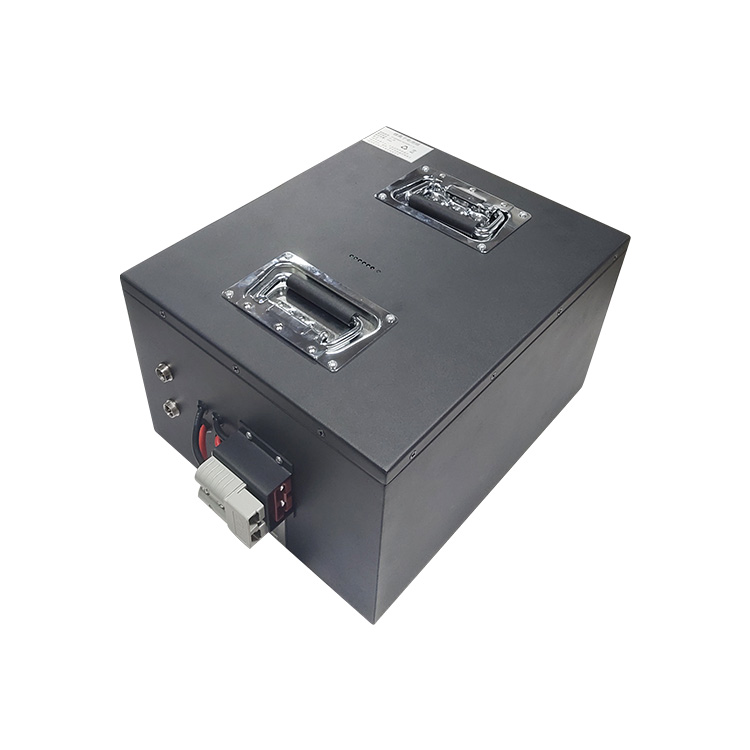
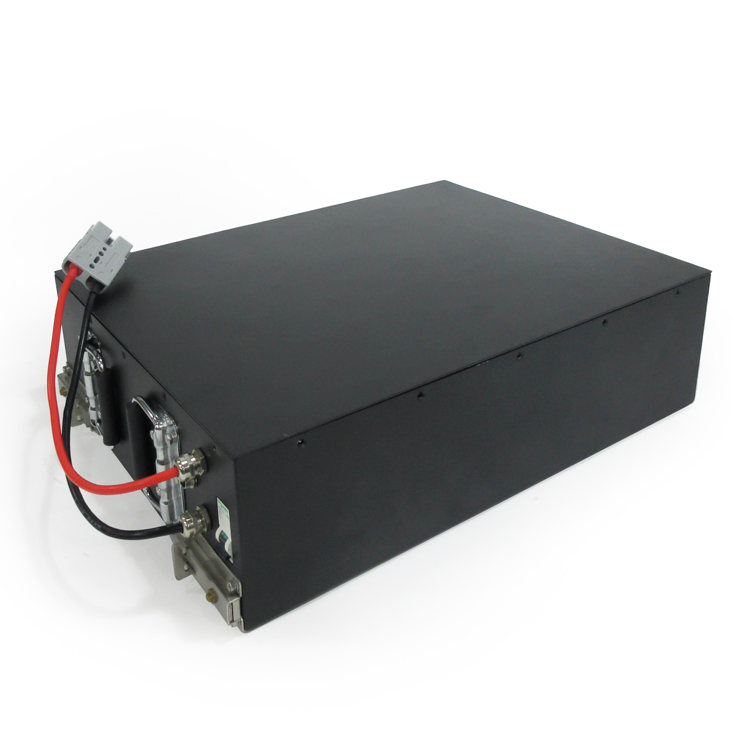
battery pack adopts modular design, combining multiple battery cells into several battery modules, and then achieving the required voltage and capacity through series-parallel combination. The modular structure facilitates maintenance and replacement, improves the overall structural strength, and enhances the vibration resistance and impact resistance.
3. Battery management system (BMS)
BMS monitors the voltage, current, temperature and SOC (state) of battery pack in real time to realize dynamic balanced charging and prevent the single battery from being damaged due to uneven charging and discharging. In low temperature environment, BMS also needs to have temperature compensation function to adjust charging and discharging strategy in time to prolong battery life.
4. Heat preservation and heating technology
in order to meet the challenge of low temperature in cold storage environment, battery pack design integrates insulation layer materials (such as polyurethane foam) and micro heating elements, monitors battery temperature through intelligent control system and automatically heats, keep the working temperature at Battery Pack suitableSuitable range to ensure stable performance.
5. Mechanical structure design
battery pack the shell is made of lightweight and high-strength materials, such as aluminum alloy or reinforced plastic, to ensure stable structure, waterproof and dustproof. The structural design should meet the requirements of the robot for space compactness, and have good heat dissipation performance at the same time to prevent the battery from overheating.
IV. Performance indicators and test requirements
| indicator name | target value | description |
|---|---|---|
| rated voltage | 24V or customized according to robot requirements | meet the interface requirements of robot electrical system |
| nominal capacity | 10Ah or above | ensure the robot's continuous inspection for a long time |
| Low temperature capacity retention rate | ≥ 80% @ -20 ℃ | the attenuation of battery capacity in low temperature environment is controlled within a reasonable range. |
| Discharge current | ≥ 5C | meet the requirements of robot starting and high load work |
| cycle Life | ≥ 1000 cycles | extend battery pack service life and reduce replacement frequency |
| operating temperature range | -20 ℃ ~ +45 ℃ | ensure normal work in different environments |
| security Performance | pass safety tests such as short circuit, overcharge, and overdischarge | ensure battery pack safety and no accidents |
V. Security measures
-
multiple battery protection circuit
built-in overvoltage, undervoltage, overcurrent, short circuit and temperature protection circuit to ensure automatic power off under abnormal conditions and avoid safety accidents. -
Intelligent alarm and power failure mechanism
BMS monitors the battery status in real time. If any abnormality is found, it will automatically alarm and cut off the circuit to prevent battery damage from spreading. -
Thermal runaway prevention design
fire retardant materials and heat insulation design are adopted to prevent the fire from spreading when the battery is out of control. -
Mechanical protection
strengthen the battery pack shell structure, improve the impact resistance and zhenneng resistance, and ensure that the battery monomer is not damaged by mechanical damage.
The technical solution of lithium battery battery pack of refrigerated inspection robot is the key to ensure the efficient and stable operation of the robot in low temperature environment. By selecting battery cells with strong low temperature adaptability, combining modular design, intelligent BMS management and heat preservation and heating technology, battery pack can GThe performance attenuation caused by low temperature can achieve the goal of long endurance and high safety. Reasonable mechanical structure design and multiple security measures ensure that battery pack can not only supply power stably but also ensure the safety of use in harsh refrigeration environment.

 Dongguan Juneng New Energy Technology Co., Ltd.
 137 5142 6524(Miss Gao)
 susiegao@power-ing.com
 Xinghuiyuan High tech Industrial Park, Dalang Town, Dongguan City, Guangdong Province

 Yue Gong Wang An Bei No. 4419002007491