Hot products




Contact us
Dongguan Juneng New Energy Technology Co., Ltd.
137 5142 6524(Miss Gao)
susiegao@power-ing.com
Xinghuiyuan High tech Industrial Park, Dalang Town, Dongguan City, Guangdong Province
From standardized platforms to scenario-specific customization: examining the technical depth of PACK integration.
time:2026-08-18
In the lithium battery industry, there is a common misconception: battery pack is a simple series-parallel connection of cell. However, the ten-year practice of gathering energy and new energy sources tells us that PACK integration is a precise discipline that integrates electrochemical, thermodynamic, structural mechanics and software engineering. An excellent battery pack is not a general-purpose piece, but a customized solution for specific scenarios.
This kind of philosophy of "tailoring" is first reflected in accurate matching of cell selection on. In the product matrix of energy-gathering new energy, ternary lithium and lithium iron phosphate coexist, and cylindrical and square cell complement each other-not the swing of the technical route, but the response of the scene demand. Electric scooters pursue extreme lightweight, using 18650 ternary lithium batteries; Heavy load handling of AGV emphasizes safety and longevity, using 32700 lithium iron phosphate batteries cell; Household energy storage requires large capacity and thermal stability, using large monomer square lithium iron phosphate batteries cell. There is no "best" cell, only "most suitable" cell.
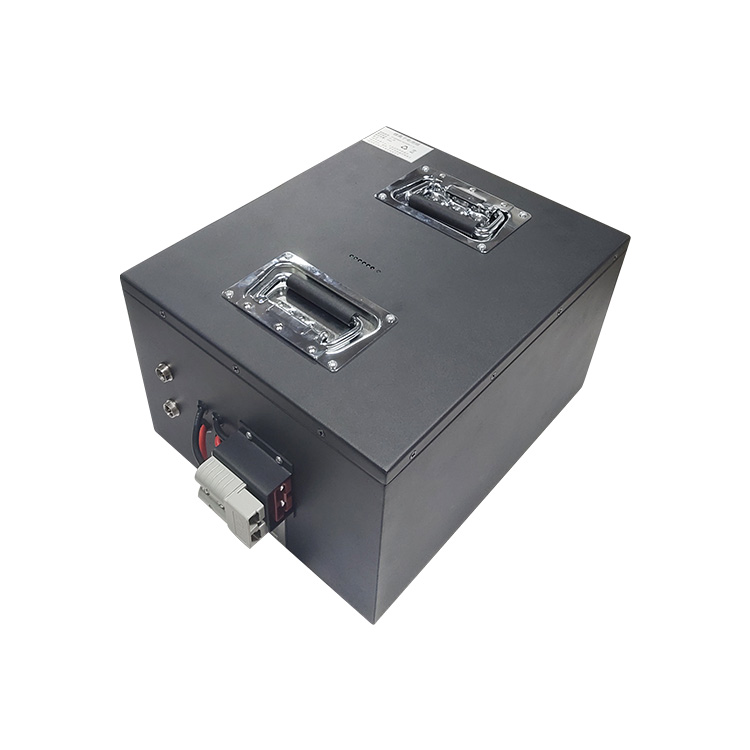
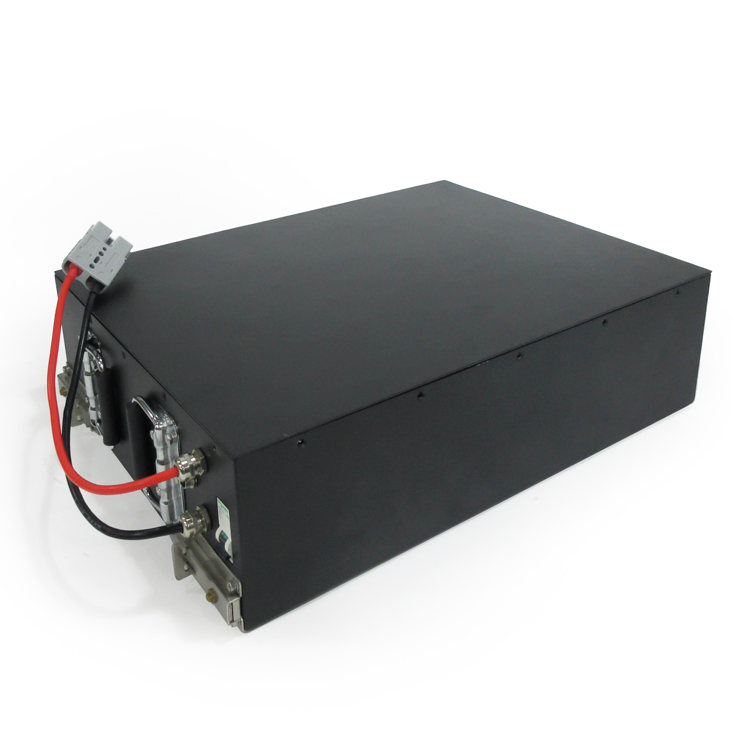
Secondly, it is reflected in scenario adaptation of structural design on. DGPI-CSK-004 T-bar scooter battery W53mm ultra-thin design is designed to embed the bottom plate without damaging the lines of the whole vehicle; The DGPI-RTV-001 RV battery has a large capacity of 132kg, which is designed to support multi-day electricity consumption in off-grid state; the standard 19-inch size of the DGPI-SE-002 cabinet energy storage battery is designed to be directly embedded into the cabinet array of the data center. The thickness of each millimeter, the weight of each gram, and the position of each interface are precisely calculated in a scenario.
intelligent Evolution of the BMS algorithm on. Self-developed BMS, which gathers new energy sources, is not a "one-size-fits-all" general solution, but a deep customization for different scenarios. The BMS of the AGV Battery emphasizes real-time communication and predictive maintenance with the scheduling system; The BMS of the RV battery focuses on wide temperature range adaptation and seamless switching of emergency backup power; The BMS of the energy storage battery is linked with EMS, realize intelligent optimization of peak-Valley arbitrage and photovoltaic absorption. From "threshold triggering" to "life orientation", from "monomer protection" to "system coordination", the evolutionary history of BMS is the deepening history of scene understanding.
Behind the "tailored clothes" is a set of powerful platform capability. Solar Energy New Energy has developed standardized cell modules, common electrical architectures, and reusable software frameworks. On this basis, it can be quickly customized for different scenarios. This "platform-based base + scenario-based adaptation" mode not only ensures delivery efficiency, but also meets differentiated needs-the development cycle of new products is compressed from several months to several weeks, and the degree of customization does not decrease at all.
In the new energy gathering laboratory, every piece battery pack before leaving the factory, you have to go through 72 hours of "Graduation Examination": capacity calibration, internal resistance test, thermal runaway verification, vibration shock, high and low temperature cycle...... These tests are not a formality, but a strict inspection of the results of "tailored clothes. After all, the real customization is not the stacking of parameters, but the reliability that can stand the test of time.

Contact us
 Dongguan Juneng New Energy Technology Co., Ltd.
 137 5142 6524(Miss Gao)
 susiegao@power-ing.com
 Xinghuiyuan High tech Industrial Park, Dalang Town, Dongguan City, Guangdong Province

CUSTOMER SERVICE
 Yue Gong Wang An Bei No. 4419002007491