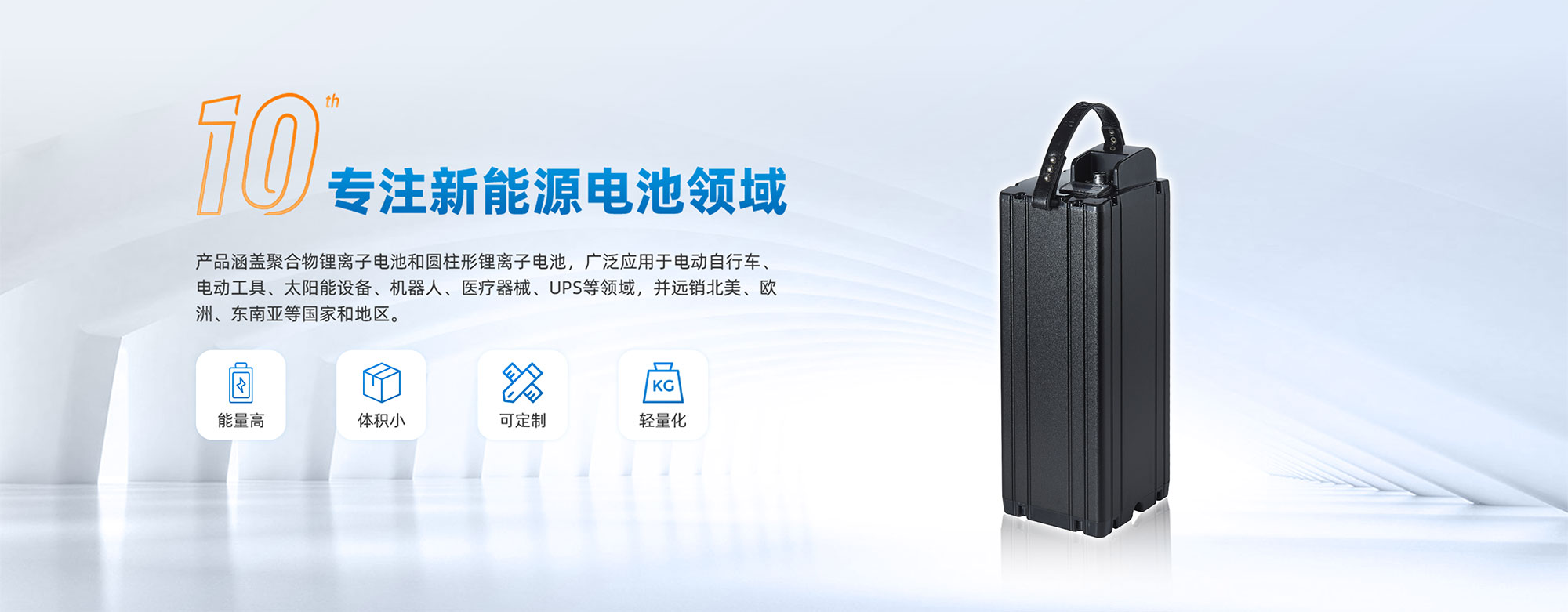
Hot products




Contact us
Dongguan Juneng New Energy Technology Co., Ltd.
137 5142 6524(Miss Gao)
susiegao@power-ing.com
Xinghuiyuan High tech Industrial Park, Dalang Town, Dongguan City, Guangdong Province
When Energy Storage Pack Experience Reshapes Power Battery Design
time:2026-08-05
In the power battery industry, power and energy storage have long been regarded as two parallel tracks. The power battery pursues high energy density and fast charging capability. The energy storage battery emphasizes long cycle life and low cost, and the technical route is different. However, the new energy source found that when some "slow kung fu" of energy storage PACK was introduced into the power battery design, it unexpectedly opened up new possibilities. A cross-Scene Technology feedback is blurring the boundaries of the two tracks.
I. "Slow philosophy" of energy storage: Treasure neglected by power batteries
the design logic of energy storage PACK is completely different from that of power battery.
Energy storage power station is not sensitive to space, but it is extremely harsh to the cost of electricity. A piece of energy storage battery pack needs to complete 6000-10,000 cycles within 10-15 years, and any acceleration and attenuation factors will be amplified by time. Therefore, the energy storage PACK has accumulated a lot of experience of "working slowly and working carefully" in terms of thermal management accuracy, cell consistency control and BMS equilibrium strategy.
"Energy storage engineers spend three years optimizing a set of liquid cooling flow channels to reduce the temperature difference from 5℃ to 2℃, which is almost unimaginable in the field of power batteries-the latter pays more attention to how much cell CTP can plug. "The vice president of energy gathering New Energy Technology pointed out," but when the power battery enters the era of 800V high voltage and 4C fast charge, we find that the energy storage 'slow kung fu'Just the key to solve the heat runaway and life anxiety. "
II. Cross-scenario migration of thermal management accuracy: from 2℃ to 3℃
the thermal management experience of energy storage PACK is the first breakthrough to gather new energy sources and feed them back to power batteries.
The liquid cooling system of the energy storage power station usually controls the temperature difference of the whole package within 2℃-this is not for comfort, but for keeping the attenuation rhythm of each cell after 6,000 cycles. If the temperature difference reaches 5℃, the cycle life gap between the edge cell and the center cell can reach 30%, which means that the whole package is scrapped in advance.
Energy gathering new energy has introduced this experience into the design of high-end passenger car PACK. Through the combination of bionic flow channel, gradient heat conduction material and intelligent temperature control algorithm, the temperature difference of power battery pack is compressed from the common 5-8 ℃ in the industry to less than 3 ℃. The measured data show that under 4C fast charge condition, the maximum temperature of cell is stable below 45℃, and the capacity retention rate increases by 8% after 1000 cycles.
"Energy storage teaches us that thermal management is not 'heat dissipation ', but 'temperature control'-accurate to every cell temperature control. "The thermal management engineer explained.
III. Cell consistency control: From Group allocation to Lifecycle governance"
the stringent requirements of energy storage PACK for cell consistency also reshape the control standards of power batteries.
The cumulative effect of cell inconsistency is extremely fatal due to the large number of energy storage systems connected in series and long operation cycle. In the field of energy storage, energy gathering new energy has established a four-layer consistency governance system of "full inspection of incoming materials + dynamic allocation + active equilibrium + cloud tracking", which controls the whole package pressure difference within 20mV.
After this system was migrated to the power battery, it produced unexpected effects. The BMS equilibrium of traditional power batteries is mostly started passively at the end of charging. However, the introduction of energy storage experience enables the development of "predictive equilibrium" for new energy sources-based on the historical attenuation model of cell, early intervention in the discharge process will eliminate the inconsistency in the bud. With the electric the rate of pillow inner temperature compensation and SOC Independent estimation, the available capacity of the whole package is increased by 5%, and the cycle life is prolonged by 10%.
IV. Cross-border integration of BMS Strategies: From "threshold trigger" to "life-oriented"
The evolutionary path of energy storage BMS also provides a mirror for power batteries.
Early BMS is a "threshold trigger"-only when the parameter is out of bounds, it acts like a fuse. In the energy storage scenario, this extensive mode exposes short boards after thousands of cycles: frequent overcharge and overdischarge accumulate as irreversible damage. Energy storage BMS of new energy sources has gradually evolved into "life-oriented"-predicting attenuation trend through electrochemical models, dynamically adjusting charging and discharging strategies, and achieving the optimal balance between income and life.
After this concept was introduced into power batteries, the strategy of "Elastic fast charge" was given birth. The system calculates the optimal charging curve in real time according to the current temperature, SOC and historical cycle times of cell: warm up before fast charging at low temperature, and automatically reduces flow protection at high SOC, after high-frequency fast charging, insert "maintenance cycle" to repair SEI film. The user's perceived charging time is only increased by 3-5 minutes, but the cycle life is prolonged by more than 15%.
"The 'life economy' of energy storage BMS has changed the power battery from 'Fast sprins' to 'far-running marathons '. "The BMS architect concluded.
V. Reverse inspiration of structural design: from "space efficiency" to "maintainability"
The battery pack of the energy storage power station is large in size and considerable in weight, but maintenance convenience is crucial-single cluster faults need to be quickly isolated and replaced without affecting the operation of the whole station. The energy storage PACK of new energy sources adopts modular plug-in design, and the replacement time of a single cluster is controlled within 30 minutes.
This "maintainability" thinking was introduced into the high-end passenger car CTC platform, which gave birth to the concept of "removable cell array. Although the CTC emphasizes the integration of cell with the chassis, the energy accumulation new energy reserves a maintenance window at the key connection point, and the robotics automation dismantling technology makes it possible to replace a single cell. This was regarded as "impossible" in the past-the ultimate form of CTC should be "unmaintainable.
"Technology is not black or white. "The chief structural engineer explained," Energy storage teaches us that it may be a more mature engineering philosophy to leave a door for long-term operation and maintenance while pursuing extreme integration. "
power and energy storage are never opponents of zero-sum games, but partners who can nourish each other. The practice of "technology feedback" of gathering energy new energy has broken the inertial thinking of scene barriers and injected rationality into the "fast iteration" driven by "slow kung fu" of energy storage, let the "innovation sharpness" of power add a sharp edge to the "dull sense of cost" of energy storage.

Contact us
 Dongguan Juneng New Energy Technology Co., Ltd.
 137 5142 6524(Miss Gao)
 susiegao@power-ing.com
 Xinghuiyuan High tech Industrial Park, Dalang Town, Dongguan City, Guangdong Province

CUSTOMER SERVICE
 Yue Gong Wang An Bei No. 4419002007491